
Understanding how Bitcoin works is essential to grasp why this monetary system is unique.
Bitcoin relies on a technology called the blockchain, a network of nodes, a mechanism known as mining, and an automatic difficulty adjustment based on the hashrate.
Here is how it works in detail.
A Bitcoin block is a storage unit that contains:
Each block is added approximately every 10 minutes.
Blocks are limited in size, which creates competition among transactions to be included.
This structure ensures the security and transparency of the Bitcoin network.
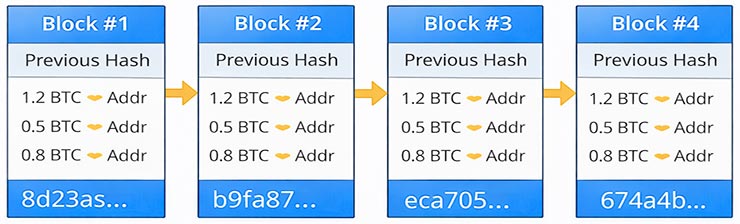
The Bitcoin blockchain is a public and decentralized ledger that records all transactions since 2009.
Each block contains the cryptographic hash of the previous block. This creates a secure and immutable chain.
If someone attempts to modify a past transaction, they would have to recalculate all the subsequent blocks, which would require colossal computing power.
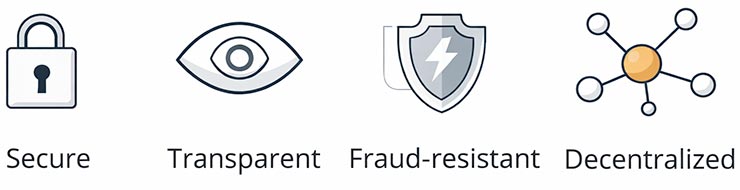
This mechanism is what makes the blockchain:
A Bitcoin node is a computer connected to the network.
Its role:
Each node independently validates the rules of the system. This prevents any central authority from controlling Bitcoin.
The more Bitcoin nodes there are around the world, the more resistant the network is to censorship and attacks.
In Bitcoin, validators are called miners.
Bitcoin mining consists of:
This process relies on Proof of Work.
The miner who finds the solution first:
Mining secures the network and prevents double spending.
The Bitcoin hashrate represents the total computing power used by miners.
It is measured in hashes per second (H/s), often in exahashes per second (EH/s).
A high hashrate means:
The higher the hashrate, the more expensive it becomes to attack the Bitcoin network.
Bitcoin automatically adjusts the mining difficulty every 2016 blocks (approximately every two weeks).
Objective: maintain an average time of 10 minutes per block.
If the hashrate increases → the difficulty increases.
If the hashrate decreases → the difficulty decreases.
This automatic adjustment allows Bitcoin to operate without a central authority and remain stable over time.
The functioning of Bitcoin is based on:
This architecture allows Bitcoin to be:
Understanding how Bitcoin works means understanding why it represents a major innovation in the history of money.